
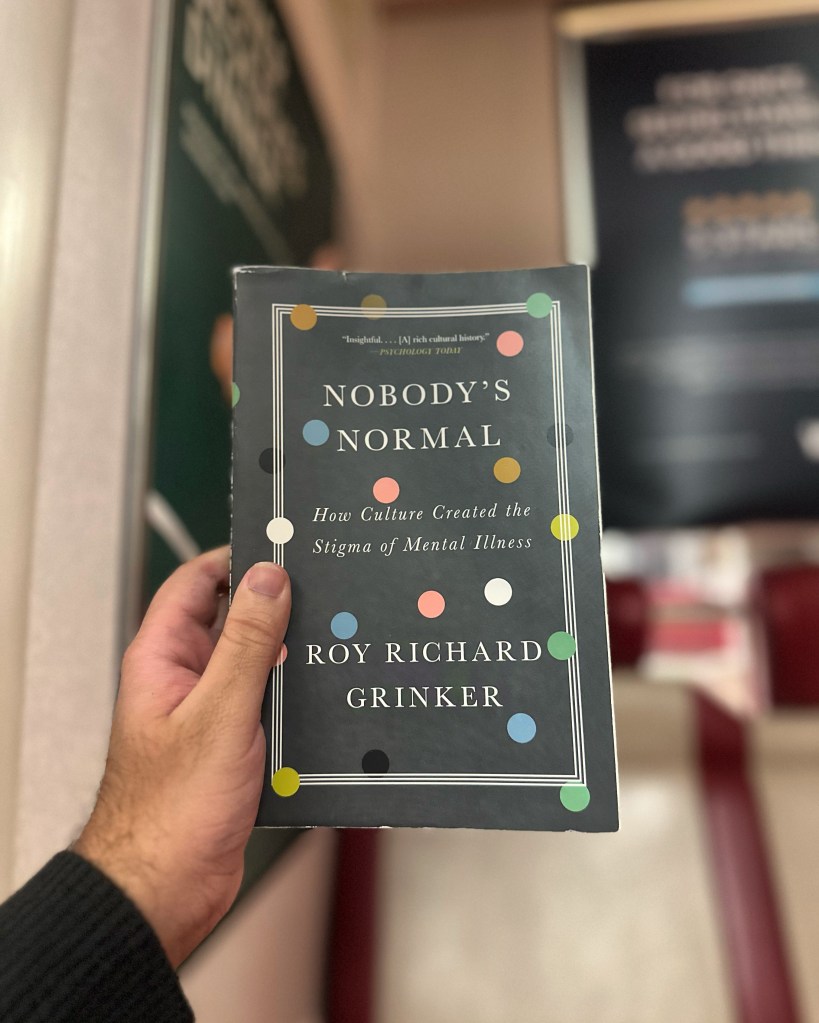
As a doctoral student in clinical psychology, I am deeply committed to expanding my understanding of the mental health field and its multifaceted complexities. Pursuing this degree is not just about earning credentials—it’s about equipping myself with the knowledge and tools to make meaningful contributions to the field and better serve those who seek mental health support. Whether through engaging with the latest research, exploring diverse cultural perspectives, or reflecting on the history of mental health care, I am always eager to deepen my insight and challenge my assumptions. Reading books like Nobody’s Normal allows me to stay informed and critically engaged, fostering both personal and professional growth in my journey as a future clinician.
Roy Richard Grinker’s Nobody’s Normal is a fascinating and deeply empathetic exploration of how cultural history has shaped our understanding of mental illness and perpetuated stigma. Drawing from his personal experiences, family history, and expertise as an anthropologist, Grinker provides a nuanced and hopeful look at how far society has come—and how much further we have to go—in embracing mental health as a natural part of human diversity.
What stands out most in this book is Grinker’s ability to weave together personal anecdotes with global perspectives. From his family’s connection to Freud to his daughter’s experience with autism, he brings an authenticity and warmth to the narrative that makes complex historical and cultural analysis accessible and engaging. The book’s use of cross-cultural comparisons, spanning from the United States to Africa and Asia, highlights how diverse societies define, treat, and stigmatize mental health differently, offering valuable insights into the cultural roots of these issues.
While the book is deeply informative, it’s not without its challenges. The dense historical sections may feel overwhelming for casual readers, and at times, the narrative shifts between personal stories and academic research can feel disjointed. However, these moments are outweighed by the book’s compassionate message and its hopeful outlook on the future of mental health awareness.
Grinker’s central argument is clear and compelling: stigma is not an inevitable byproduct of mental illness but a cultural construct that can be dismantled. His optimism about the increasing acceptance of neurodiversity in the 21st century is both inspiring and timely.
Overall, Nobody’s Normal is a thought-provoking read for anyone interested in mental health, cultural history, or social change. It’s a book that challenges us to rethink the way we view mental illness and encourages us to be part of the movement to end stigma for good.


 TheIndianBookworm
Leave a comment