
When I was about 16 years old, I learned about the Stanford Prison Experiment and Philip Zimbardo for the very first time in detal. In fact, he was one of the inspirations behind my decision to pursue a doctorate in Clinical Psychology. His work fascinated me because it seemed to explain something fundamental about human nature—the way ordinary people can be shaped by their environment to act in ways they never imagined possible. This curiosity eventually led me to “The Lucifer Effect: Understanding How Good People Turn Evil”, a thought-provoking exploration into the psychology of human behavior, particularly how situational forces and systemic structures can drive ordinary people to commit acts of cruelty. Using the infamous Stanford Prison Experiment as its foundation, the book delves into historical and contemporary examples of moral corruption, from wartime atrocities to corporate scandals. But how much of Zimbardo’s argument holds up to scrutiny today?
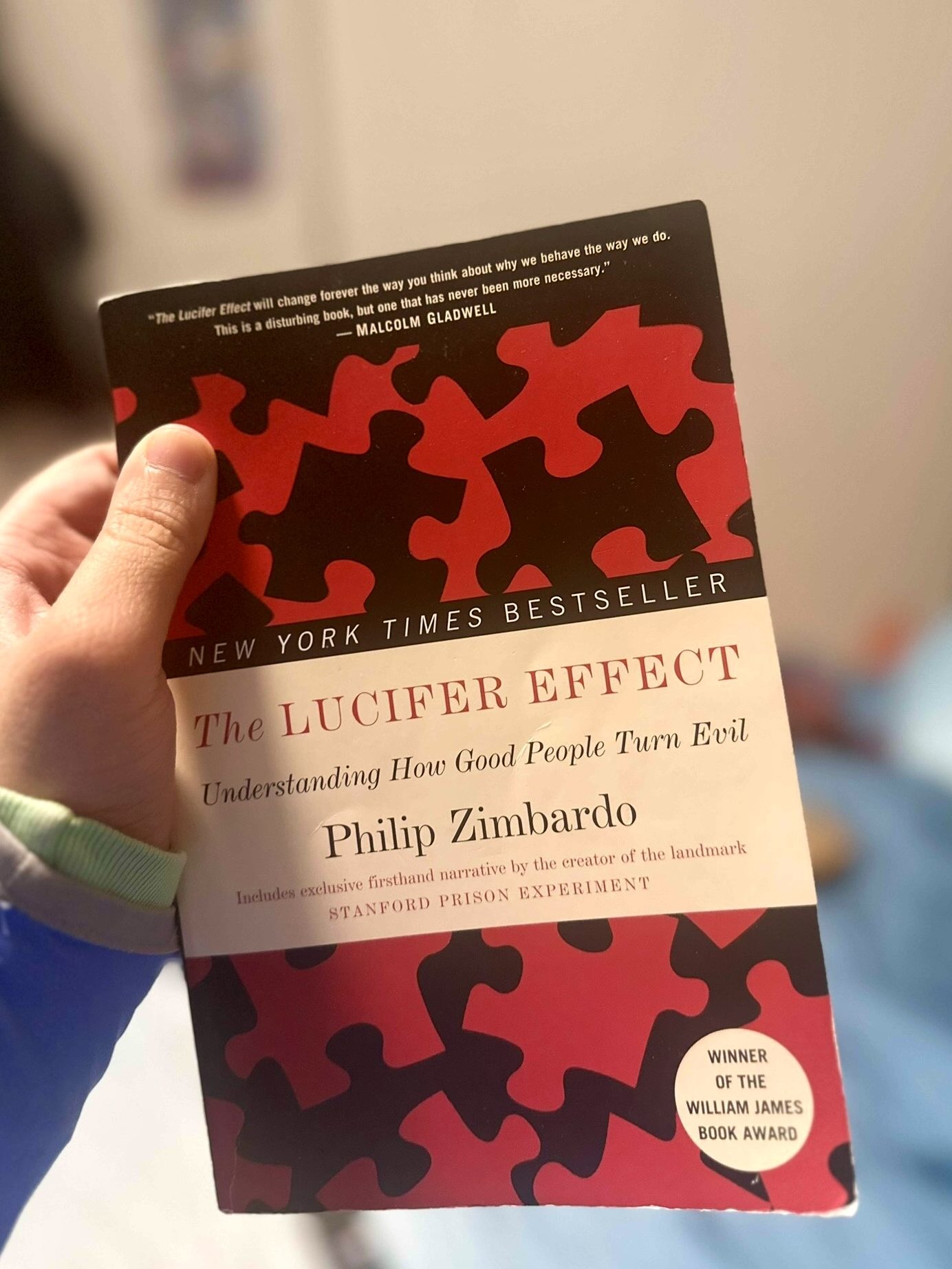
Philip Zimbardo’s The Lucifer Effect: Understanding How Good People Turn Evil is a thought-provoking exploration into the psychology of human behavior, particularly how situational forces and systemic structures can drive ordinary people to commit acts of cruelty. Using the infamous Stanford Prison Experiment as its foundation, the book delves into historical and contemporary examples of moral corruption, from wartime atrocities to corporate scandals. But how much of Zimbardo’s argument holds up to scrutiny today?
Zimbardo’s central thesis is that people are not inherently good or evil; rather, their actions are largely shaped by the environments they are placed in. His Stanford Prison Experiment (SPE) famously demonstrated how quickly individuals could adopt roles of power and submission in a simulated prison environment. The guards, given authority, became abusive, while the prisoners—who had done nothing wrong—became passive, broken, and psychologically distressed. The experiment, initially planned for two weeks, was terminated after just six days due to the extreme reactions of participants.
Beyond the SPE, Zimbardo extends his analysis to real-world cases of brutality, such as the abuses at Abu Ghraib, the Holocaust, and corporate corruption scandals. His argument reframes these events through the lens of social psychology, suggesting that it is the ‘bad barrel’ (corrupt systems and toxic environments) rather than ‘bad apples’ (individual moral failings) that are responsible for evil.
One of the most compelling aspects of The Lucifer Effect is its deep dive into how group dynamics, obedience, and authority influence human actions. Zimbardo’s writing is passionate and filled with real-world applications that force readers to confront uncomfortable truths about human nature. The book is an eye-opener, pushing readers to consider their own susceptibility to situational pressures.
Zimbardo also takes time to discuss resistance to evil, emphasizing that awareness of these dynamics can help individuals build resilience and even act heroically in challenging circumstances. This offers a glimmer of hope amid the darker themes of the book.
Despite its groundbreaking nature, The Lucifer Effect has not been without criticism. One major drawback is its density—Zimbardo’s detailed descriptions, particularly of the SPE, can feel overly drawn out and, at times, self-congratulatory.
More significantly, recent critiques have called the Stanford Prison Experiment’s findings into question. A new docuseries, The Stanford Prison Experiment: Unlocking the Truth, suggests that the study’s results have been influenced by the way Zimbardo and his team guided participants. It raises concerns about whether the participants truly acted independently or were subtly pushed into fulfilling their roles. Additionally, several psychologists have pointed out that ethical flaws in the experiment weaken its scientific credibility. (Read more here)
These criticisms make it essential to read The Lucifer Effect with a critical eye, recognizing both its insights and its limitations.
Overall, The Lucifer Effect is a fascinating, albeit flawed, book that offers crucial insights into human behavior. It provides a compelling argument about the role of environment in shaping moral decisions, but with emerging doubts about the validity of the SPE, some of its conclusions warrant skepticism.
While the book remains an important contribution to psychology and social science, readers should approach it with an awareness of the ongoing debate about its findings. Have you read The Lucifer Effect? What are your thoughts on the Stanford Prison Experiment? Let’s discuss in the comments!


 TheIndianBookworm
Leave a comment